
Wim Hof breathing: in and out through the mouth
In through the mouth, out through the mouth, each round closing with a hold. The one Ed guides most.
Read this first
- Sit or lie down somewhere safe. Never practise standing.
- Never practise while driving, riding, bathing, swimming or near water.
- If you can't hold your breath any longer, breathe in. This is not a contest.
- If you feel dizzy or tingly, stop at any time and return to natural breathing.
- If you are pregnant or have a heart condition or serious health problem, ask a medical professional first. This is not medical advice.
What Ed says
Ed's Wim Hof breathing is in through the mouth and out through the mouth, with an O-shaped mouth. His image is sipping through a bubble-tea straw: relaxed and continuous, filling from belly to chest, and an exhale that is as effortless as a sigh.
In rhythm, his sessions usually start slow and then double the pace (his words: "double speed"), and each round ends with a hold. For beginners he offers half-speed versions, saying this can feel good too; you needn't start by pushing hard.
He relays Wim Hof's view that slow, completely relaxed, focused breathing gives the best result. So even when the breathing is strong, the body should stay relaxed.
「先用15個冰人慢呼吸,把身體喚醒」
Start with 15 slow Wim Hof breaths to wake the body up.
「嘴巴喉嚨全開 讓你的吸吐之間沒有停頓」
Open the mouth and throat, with no pause between the in-breath and the out-breath.
「珍珠奶茶的吸管」
A bubble-tea straw.
Hear him say it
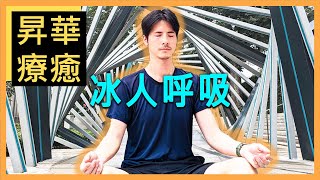


Try it now
- 1Sit or lie down. Breathe in and out through the mouth, relaxed and continuous, as if sipping through a straw.
- 2Feel the in-breath in the belly first, then moving up to the chest; let the out-breath go without effort, like a sigh.
- 3Follow the video's rhythm and holds; there's no need to count yourself.
For detail and diagrams see the Wim Hof guide.
Common experiences and questions
- Does it have to be the mouth?
- Ed's Wim Hof breathing is mouth in, mouth out. If the nose feels better, there are other styles to choose from, for example the nose-in, mouth-out generating breath.
- I can't keep up with the rhythm.
- He says don't worry; keep following the breath and the body will adapt. You can also choose the half-speed beginner version.
- Should I strain?
- The breathing can be strong, but the body stays relaxed. Throughout the rounds he reminds you to let the face, jaw and shoulders go.
More on the site
This is a write-up of Ed's teaching, not medical advice or therapy. If you have health concerns, are pregnant, or have a heart condition or trauma, ask a professional first.